Frostline provides 24/7 emergency AC repair across coastal Palm Beach County. When an AC won't turn on, isn't cooling, freezes up, or leaks water, Frostline answers the phone and dispatches a technician the same day. After-hours, weekend, and overnight AC repair available every day of the year. Air conditioning failures do not keep business hours here. Our emergency HVAC service covers nights and weekends, and the same technicians handle routine repair and maintenance the rest of the week.
Get Your Free Quote
Thank You For Your Submission!
A team member will be reaching out to you shortly.




Some AC problems can wait for standard AC repair. A few can't. Weak cooling in a comfortable house can wait for morning, but the signs below mean it's time to call now. The difference is whether the house is still liveable. Air conditioning that has stopped entirely in August is an emergency call; slow cooling is a scheduled repair.
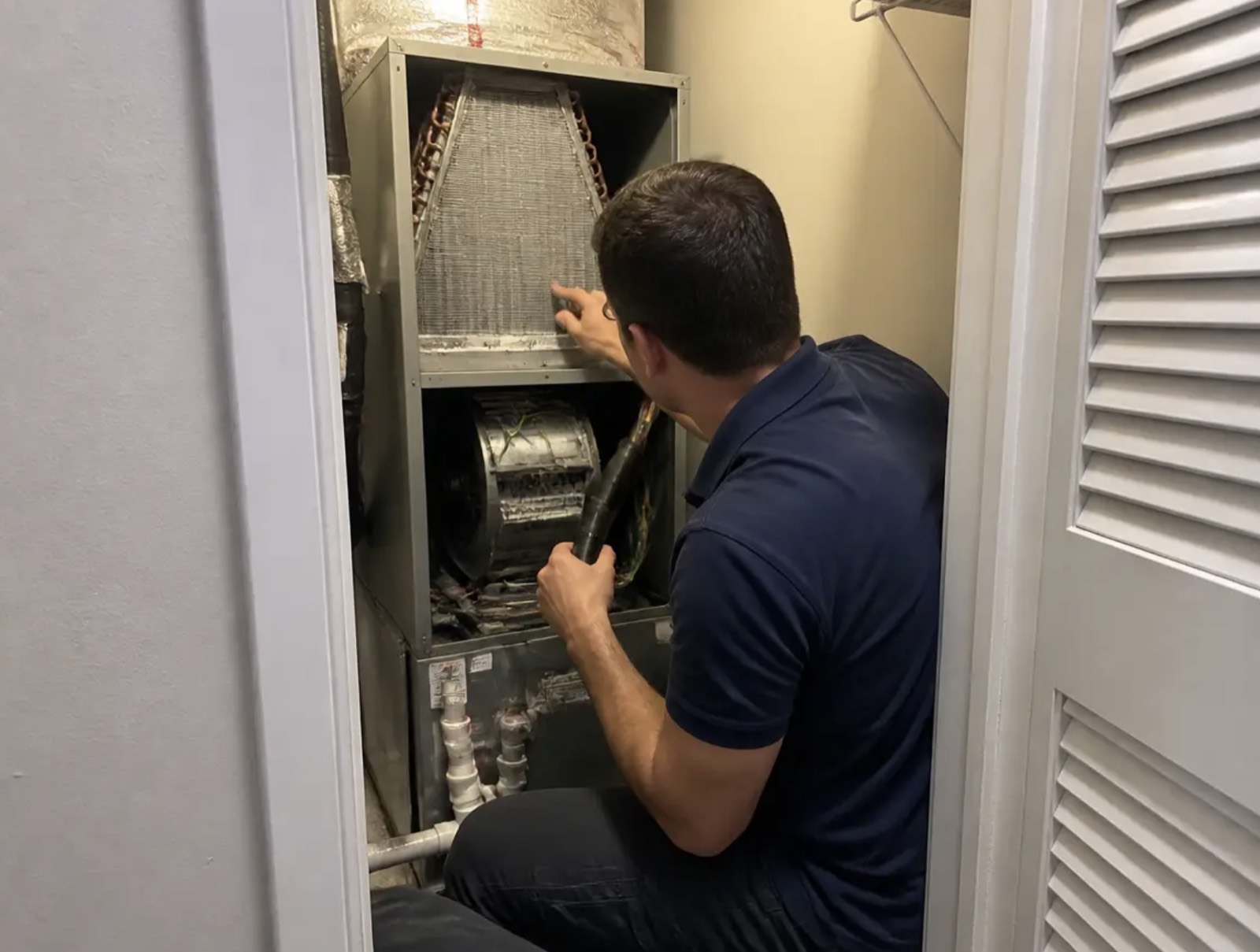
The system is unresponsive when it should be cooling. Common causes are a tripped breaker, a thermostat setting issue, a failed capacitor, or a failing compressor. A breaker that trips repeatedly means there's a short, a bad capacitor, or a compressor problem. Frostline finds which one instead of just resetting it. A breaker that keeps tripping is an electrical fault, not a thermostat problem. Our HVAC service starts at the panel rather than guessing at the air conditioning side.
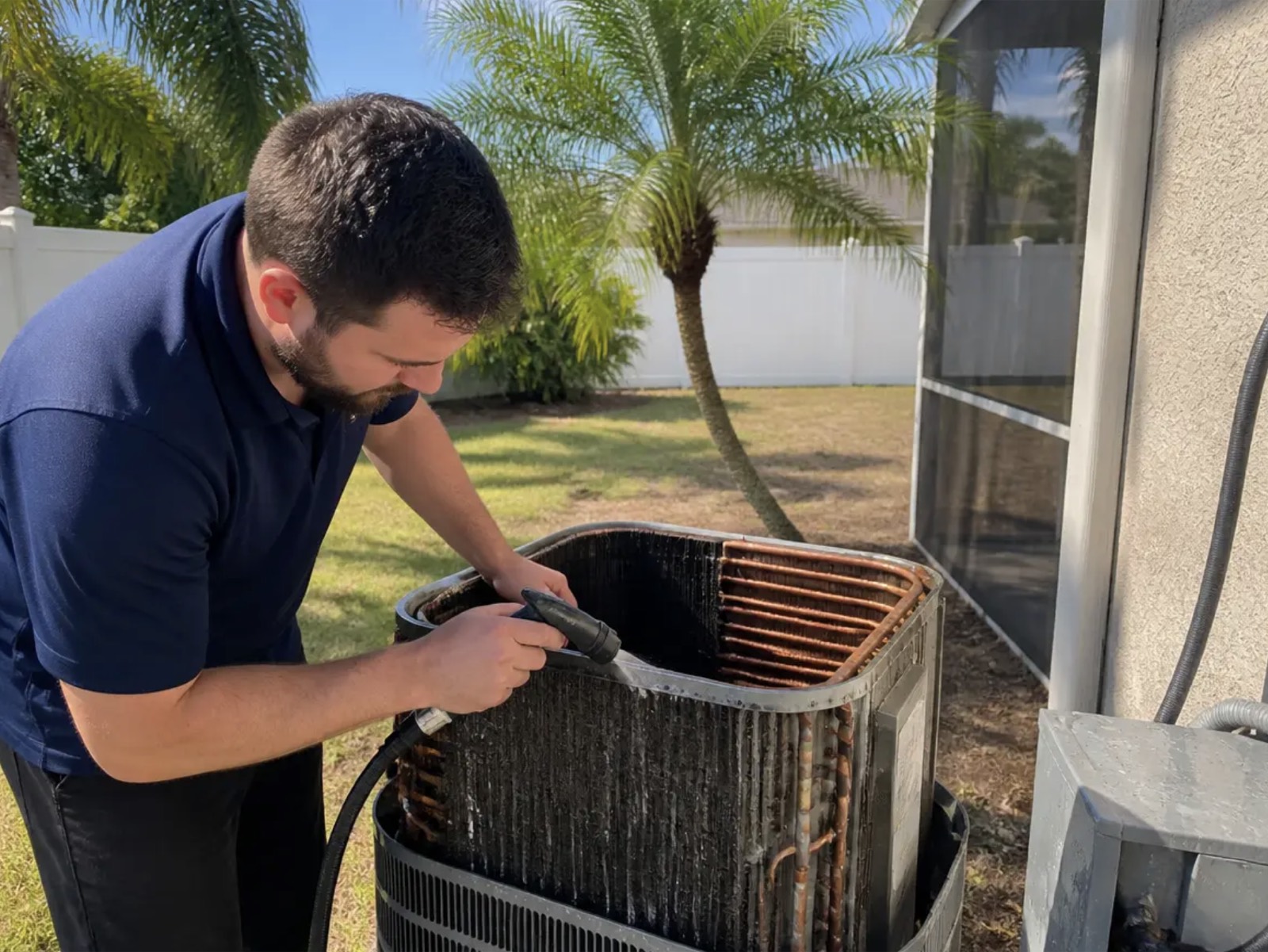
The fan runs but the air isn't cold. Usually low refrigerant from a leak, a frozen coil, or a failing compressor. In a Florida heat wave the house heats up fast, which makes this an emergency. Warm air moving through the vents means the air conditioning has stopped doing its one job. That is an emergency service call in this climate, not a next-week repair.
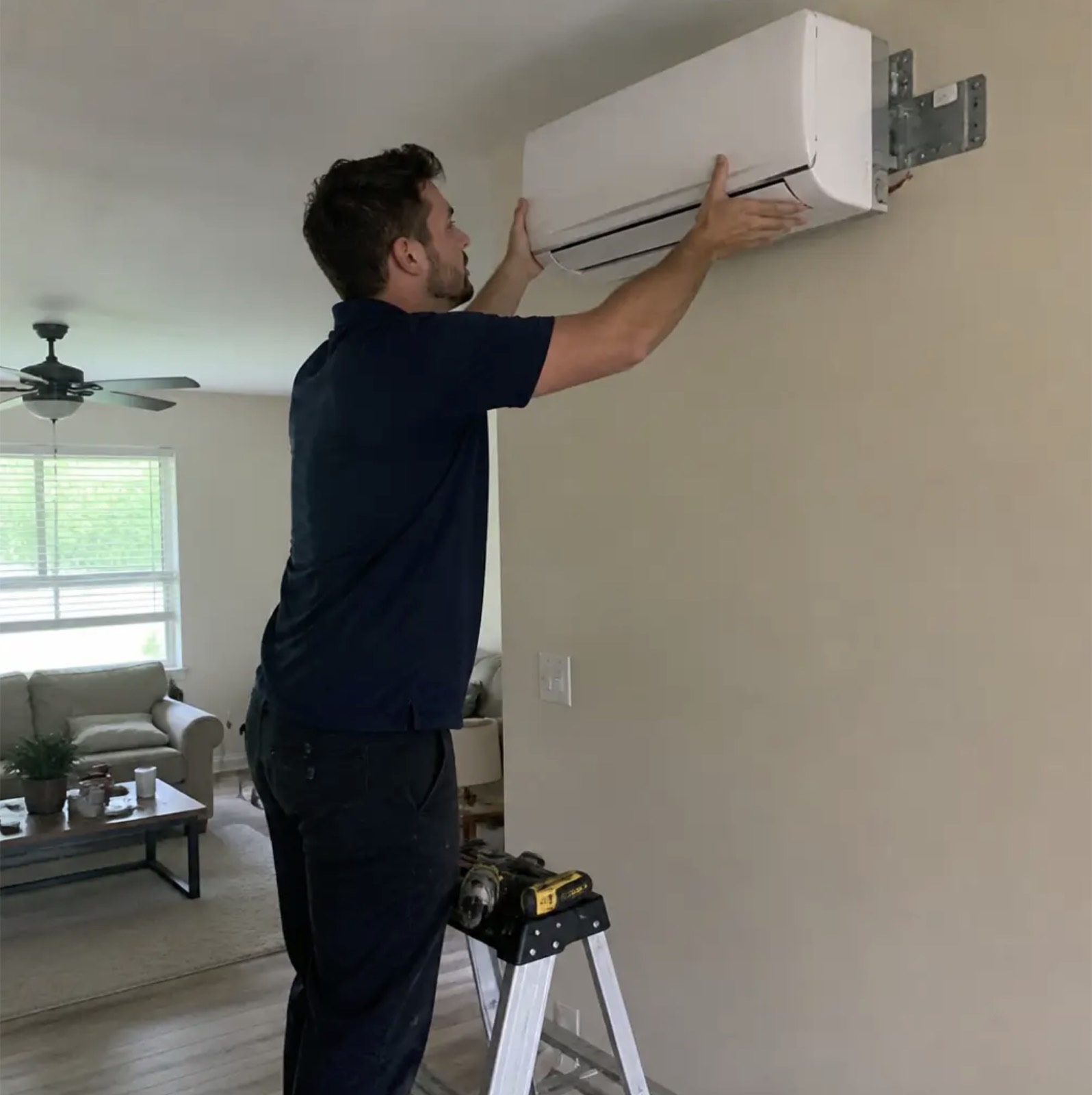
Ice on the coil or refrigerant lines stops cooling and puts the compressor at risk. Running a frozen system can flood the compressor with liquid refrigerant (liquid slugging) and damage it. The system should be shut off until a technician arrives. A frozen system needs shutting down before anything else. Turning it off protects the compressor and keeps a small repair from becoming an installation. Our HVAC service handles the thaw and the diagnosis in one visit.
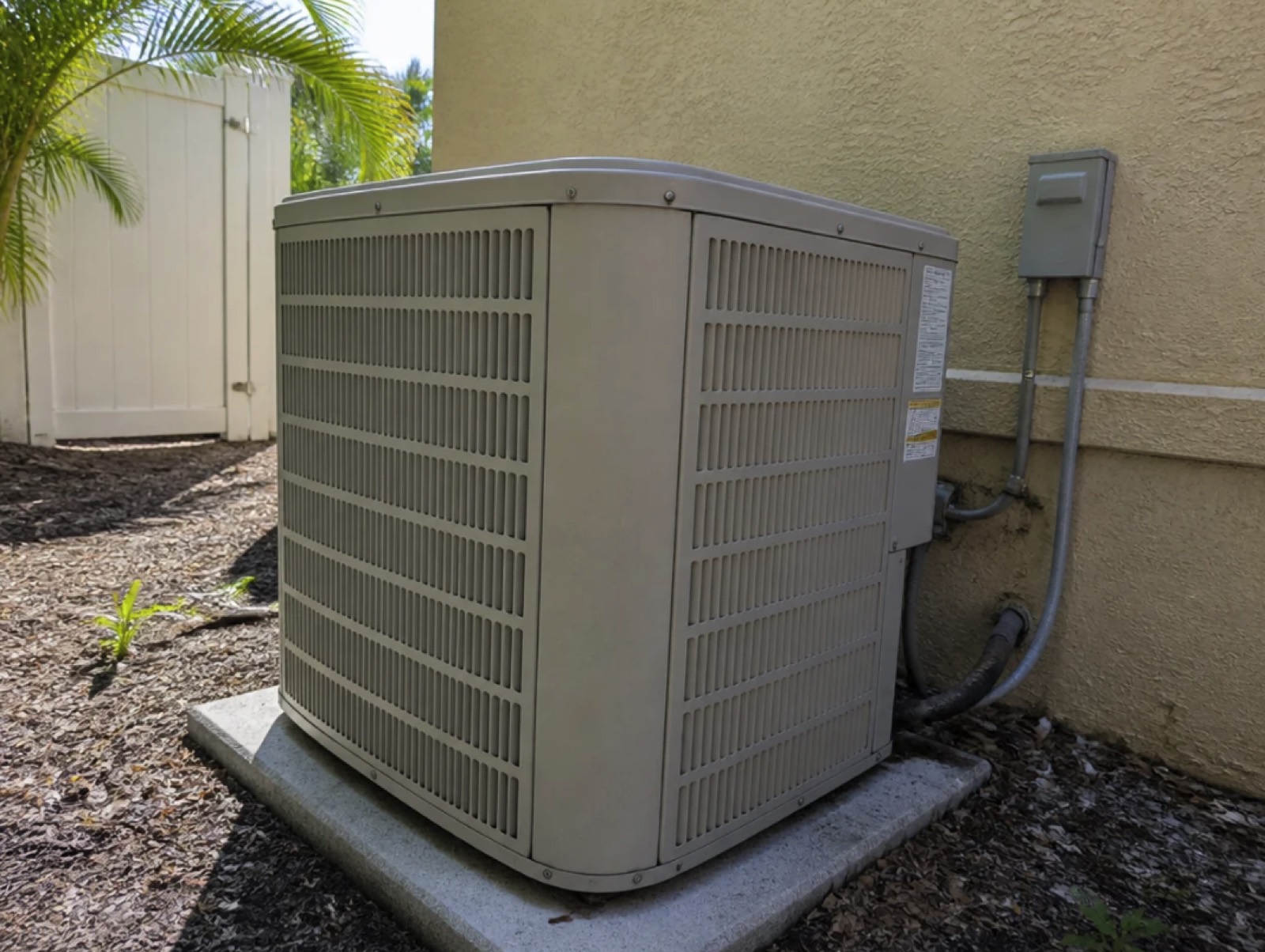
Water at the indoor unit, on the floor, or on a ceiling usually means a clogged condensate drain line. On most systems a float safety switch trips and shuts the AC down to prevent flooding, which is why a leaking AC sometimes won't turn on. Left alone, the leak causes drywall and mold damage. Water damage costs more than the repair that prevents it. A blocked duct drain is one of the most common reasons people call after hours.
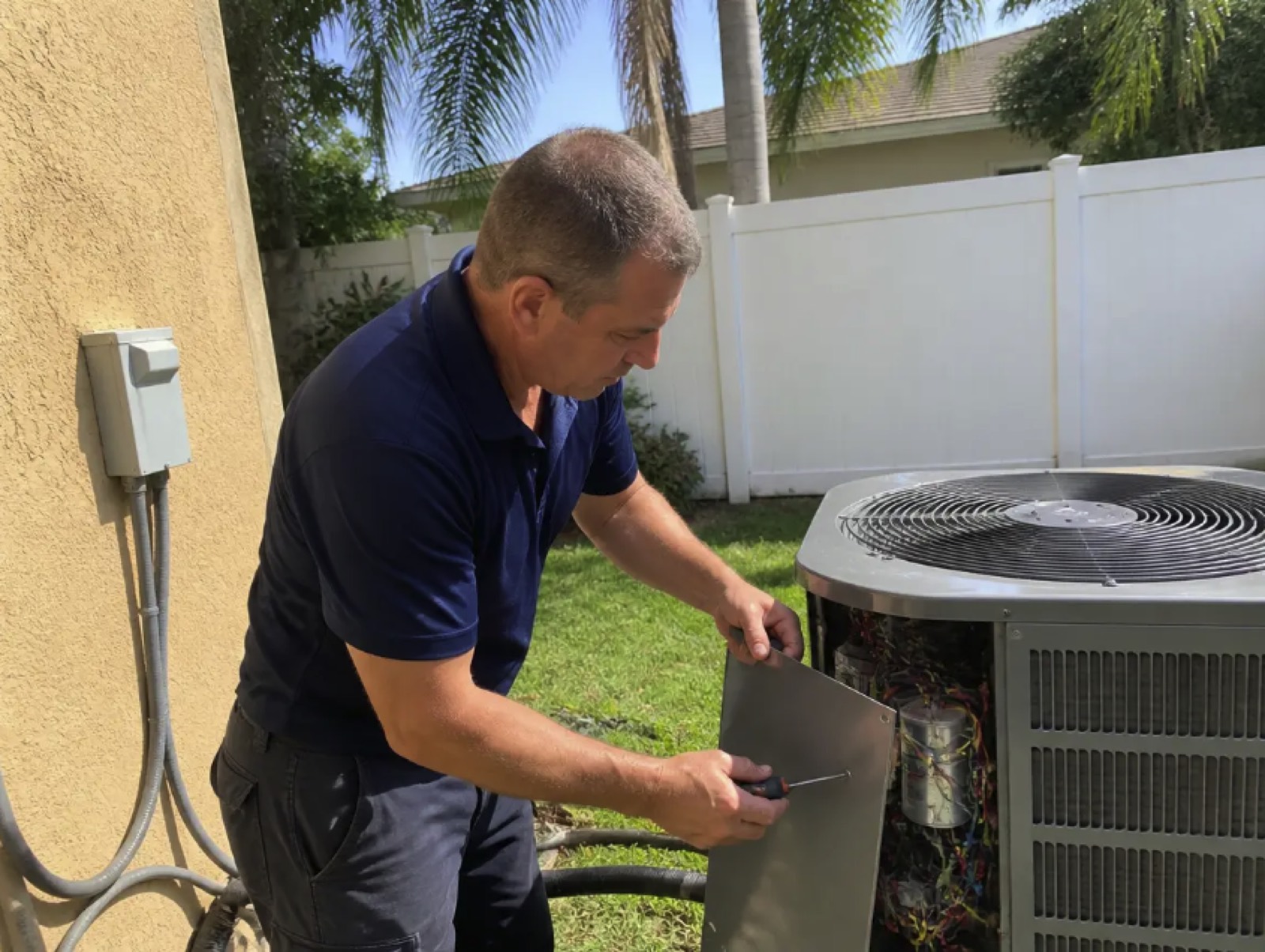
A burning or melting-plastic smell indicates an electrical fault, typically overheating wiring or a failing motor. The system should be shut off at the thermostat and the breaker before a technician arrives. Running it risks a fire. An electrical smell means shutting the air conditioning down at the breaker. HVAC service can wait an hour; a fire cannot.
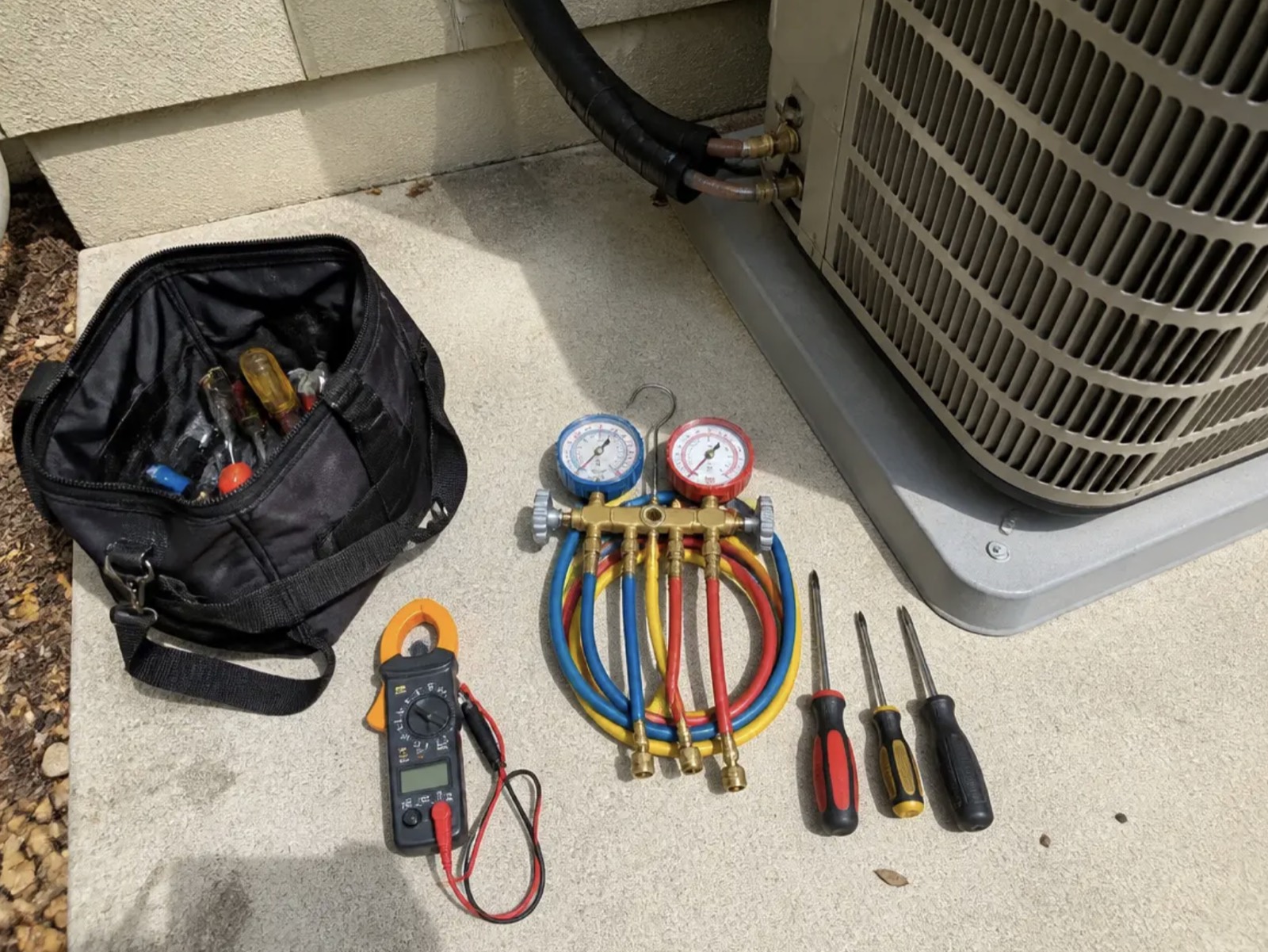
These are the failures behind most after-hours and 24-hour emergency calls. Common parts are stocked on every service truck, so most are completed on the first visit. Stocked parts are what make same-visit repair possible. Our HVAC services carry the components that fail most in this climate.
The capacitor gives the compressor and fan motor the jolt they need to start. When an AC won't turn on, the cause is usually a failed capacitor, a burned contactor, or a tripped breaker, not the full system. Capacitor replacement is the most common emergency repair and is typically a same-night fix. When a breaker trips repeatedly, Frostline locates the short or the failing component rather than resetting it. Most of these are small components rather than whole systems. Air conditioning repair at this level is usually cheaper than a night in a hotel, and HVAC services carry the common parts.
AC blowing warm air usually means refrigerant is low, and low refrigerant means a leak. Frostline locates the leak, seals it, and recharges the system to spec. A simple top-off bleeds back out within a week. Running low on refrigerant causes the compressor to overheat, so Frostline addresses these calls quickly. Refrigerant does not get used up, so a low charge always means a leak. Sealing it is the repair; topping it off is a service call you will make again, because air conditioning leaks always come back.
Ice on the coil restricts airflow and puts the compressor at risk. Compressors are built to pump gas, not liquid, so a frozen coil can cause liquid refrigerant to slug back into the compressor and damage it. Frostline thaws the system, identifies the airflow or refrigerant cause, and protects the compressor before failure. Thawing takes time, which is why an early call helps. Once the air conditioning is running again we find what caused the ice rather than just clearing it.
A clogged condensate drain line backs water into the pan, then onto the floor or into a ceiling below. On most systems a float safety switch trips and shuts the AC off to prevent flooding, which is one reason a leaking AC sometimes won't turn on at all. Frostline performs drain line cleaning, tests the float switch, and confirms the system drains correctly. Drain line cleaning is routine maintenance that becomes an emergency when it is skipped. The duct side and the drain side both get checked.
A burning smell, visible sparking, or a breaker that won't reset is an electrical hazard. Frostline shuts the system down safely, isolates the fault, and keeps the system off until the fault is fixed. Electrical faults are the one category where we shut the system down and leave it off. No HVAC service is worth a fire risk.
Our Process
Frostline answers 24/7 and dispatches a technician the same day when possible. Describe what the AC is doing when you call. A real person answers. Describing what the air conditioning is doing gets the right parts on the truck before dispatch.
While the technician is en route, you get over-the-phone guidance. If there's something safe to do in the meantime, like shutting off a frozen unit or killing a smoking breaker, Frostline walks through it on the call. Phone guidance is part of the service, not an upsell. Sometimes it resolves the call without a visit at all, and our HVAC services include that triage.
On arrival, the technician inspects the system, finds the cause, and gives the full price before any work begins. The price comes before the work, even at two in the morning. Emergency repair rates are stated on the call, not discovered on the invoice.
Most emergency repairs are finished on the first visit. Common parts are stocked on every service truck, and the technician tests the system before leaving. First-visit completion is the point of stocking parts. Air conditioning repair that needs a second trip costs everyone more.
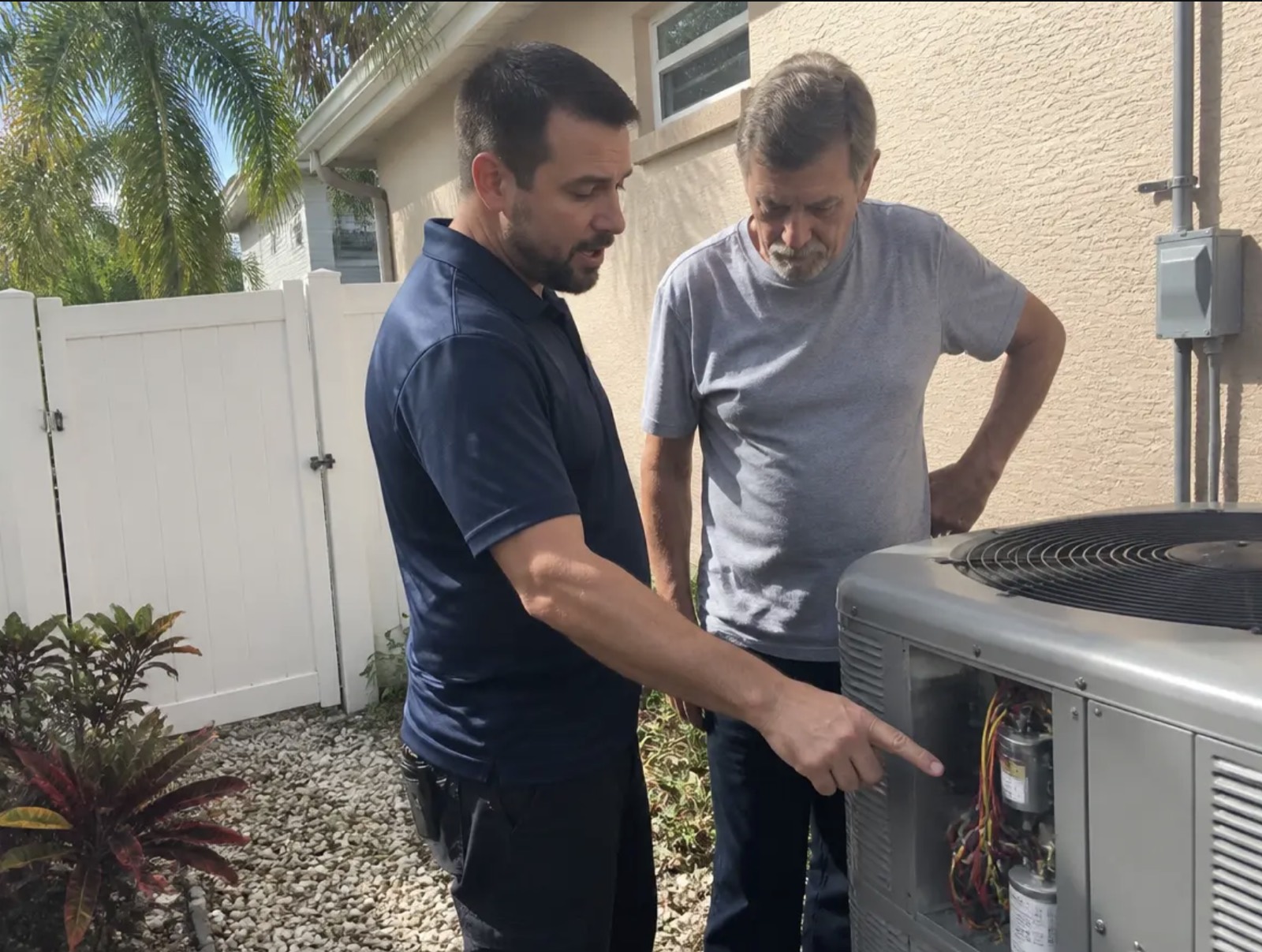
Emergency AC repair is what Frostline does. Frostline is an AC repair specialist, and the technicians dispatched for after-hours calls work on residential AC and HVAC systems every day. A real person answers every call, and Frostline gives the full price before any work begins, with no upsells. The same crew handles installation and maintenance during the week, so the HVAC services are not split across contractors.
Frostline provides emergency AC repair across Delray Beach and coastal Palm Beach County, where AC systems run nine to ten months a year and salt air accelerates equipment wear. Many emergency failures can be prevented with regular AC maintenance. When one does happen, Frostline answers. Technicians are licensed, insured, and bonded, and all repairs are backed by a warranty. Regular maintenance is what keeps the emergency calls rare. Most failures we attend were visible months earlier.
Get My Free Quote
We diagnose before we quote, at no cost. Diagnosis is part of the service, not billed separately. Air conditioning diagnosis is included either way, and the HVAC service starts there.
We stock common parts for same-day repair. Stocked parts cover most air conditioning failures, so the repair finishes on the first service call.
24/7 emergency AC service. Overnight HVAC services run at a stated rate.
Diagnosis before any quote. No upsells. The repair price is agreed before work starts. Emergency service rates are flat, with no installation upsell.
Answers to the questions homeowners ask most during an AC emergency. These come up on most emergency air conditioning calls.
It depends on the situation. If the home isn't cooling and the temperature is in the 90s, that qualifies as an emergency. A burning smell, water leaking from the unit, or a frozen AC also count as emergencies, since each gets worse the longer the system runs. Weak airflow or slow cooling in a comfortable home usually can wait for standard AC repair. Heat is the deciding factor. When the air conditioning has stopped and the house is climbing through the 90s, that is an emergency service call regardless of the hour.
Start at the thermostat: set it to COOL, several degrees below room temperature, with fresh batteries. Then check the breaker and reset it once. If the breaker trips again, leave it off. A breaker that won't reset points to a short, a failed capacitor, or a compressor problem. Also check the disconnect box at the outdoor unit and the air filter, since a heavily clogged filter can shut the system down. If none of that restores operation, the system needs a technician. Have the model number ready when you call; it speeds the HVAC service along.
In a Florida heat wave, usually yes. Warm air means the system isn't cooling, which is typically low refrigerant from a leak, a frozen coil, or a failing compressor. The home heats up quickly in these conditions, making it an emergency call. Frostline diagnoses the actual cause rather than topping off refrigerant that will leak back out within days. Topping off refrigerant is not a repair. Our service locates the leak first, which is the only version that lasts.
If the system is frozen or blowing warm, no. Running a failing AC can turn a small repair into a full compressor replacement, and a frozen coil can flood the compressor with liquid refrigerant and finish it off. Also avoid rapidly cycling the system on and off. This is the 3-minute rule: a compressor needs several minutes for internal pressures to equalize before restarting, or it overheats. Most thermostats build that delay in. If the home is comfortable and the cooling is only slow, the repair can wait for a daytime visit. Air conditioning installation is the cost of not waiting.
Frostline answers 24/7 and dispatches a technician as quickly as possible, same-day on most calls, including evenings, weekends, and after-hours. When you call, Frostline provides a realistic arrival window. Arrival windows are given honestly. Emergency HVAC service in a heat wave gets busy, and we would rather say two hours than promise thirty minutes.
Shut the AC off if it is frozen, leaking water, or smells like burning. Running it makes the damage worse. Close blinds against direct sunlight, run fans for air circulation, and stay hydrated. Those steps buy time until the technician arrives. None of them replace the repair, but they keep the house liveable. Call us while you wait.
Even during an emergency call, Frostline provides the repair-versus-replace math. Two rules apply: the $5,000 rule (multiply the unit's age by the repair cost; if the total exceeds $5,000, replacement should be considered) and the 50% rule (if a single repair costs more than half the price of a new system, it's time to look at AC replacement). A 12-year-old unit needing a significant repair typically clears both thresholds. Frostline provides the numbers and lets the homeowner decide. Even at two in the morning the maintenance-versus-installation math gets shown. Emergency pricing does not change the numbers, only the hour.