
Frostline installs the equipment that actually fixes your home's air, across coastal Palm Beach County. We don't just test it, we dry it, filter it, and disinfect it with whole-house dehumidifiers, UV lights, and better filtration, all sized for Florida humidity. The home assessment is free. Indoor air quality work starts with what the air actually contains. We assess the home, name the pollutants that matter, and install equipment sized to the problem rather than to a catalogue.
Get Your Free Quote
Thank You For Your Submission!
A team member will be reaching out to you shortly.





Florida air is humid, and a tightly built home traps whatever is in it. If any of these sound familiar, the air itself is worth a look. Poor indoor air quality shows up as symptoms before it shows up on any meter. Health complaints that ease when you leave the house are the clearest signal of indoor air trouble.
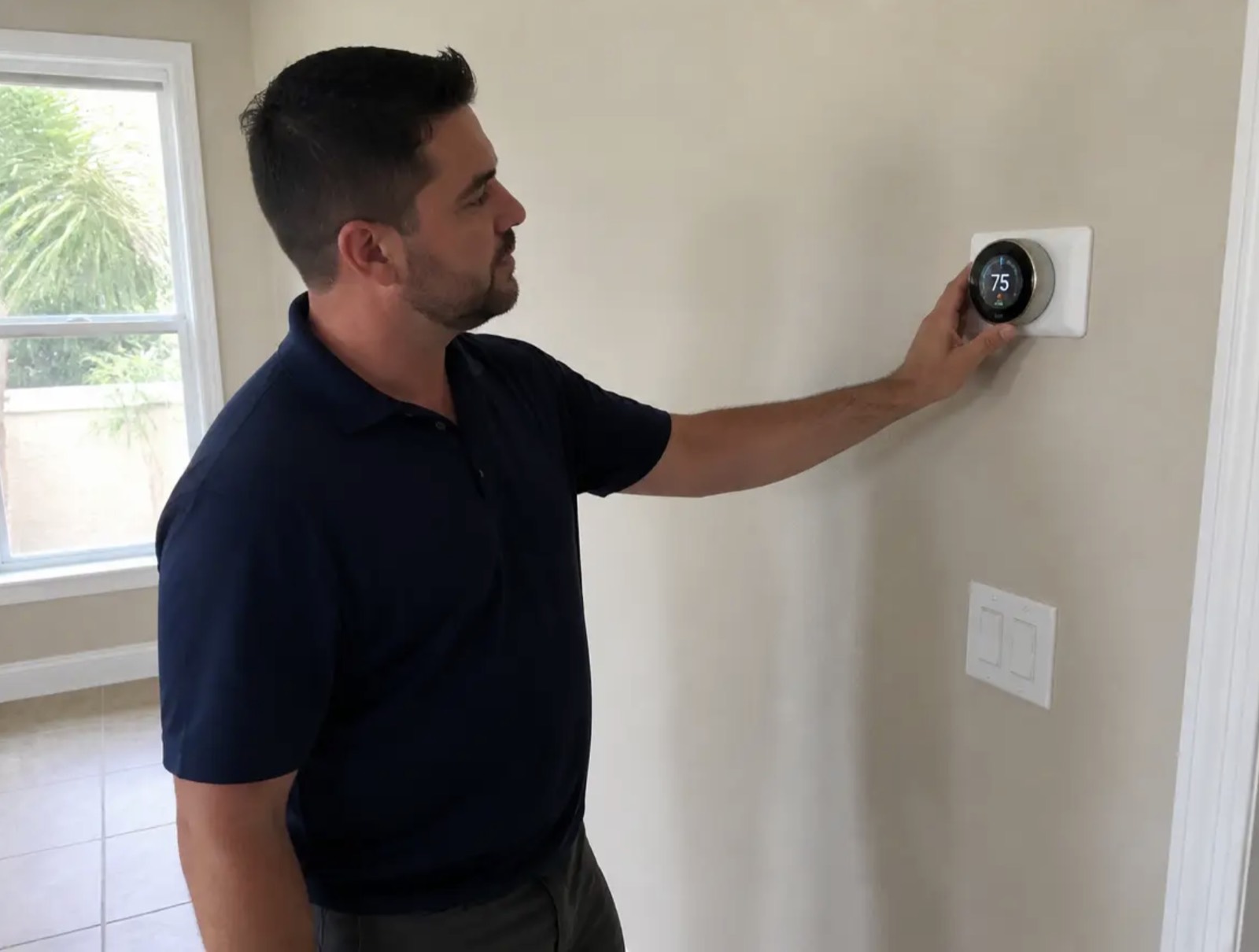
The AC runs but the house still feels damp and sticky, especially in summer. Florida air holds a lot of moisture, and if the system can't pull it down, humidity sits in the house and feeds mold and dust mites. Damp air carries more than moisture. Mold spores and dust mites are indoor air pollutants in their own right, and both track with how wet the house stays.
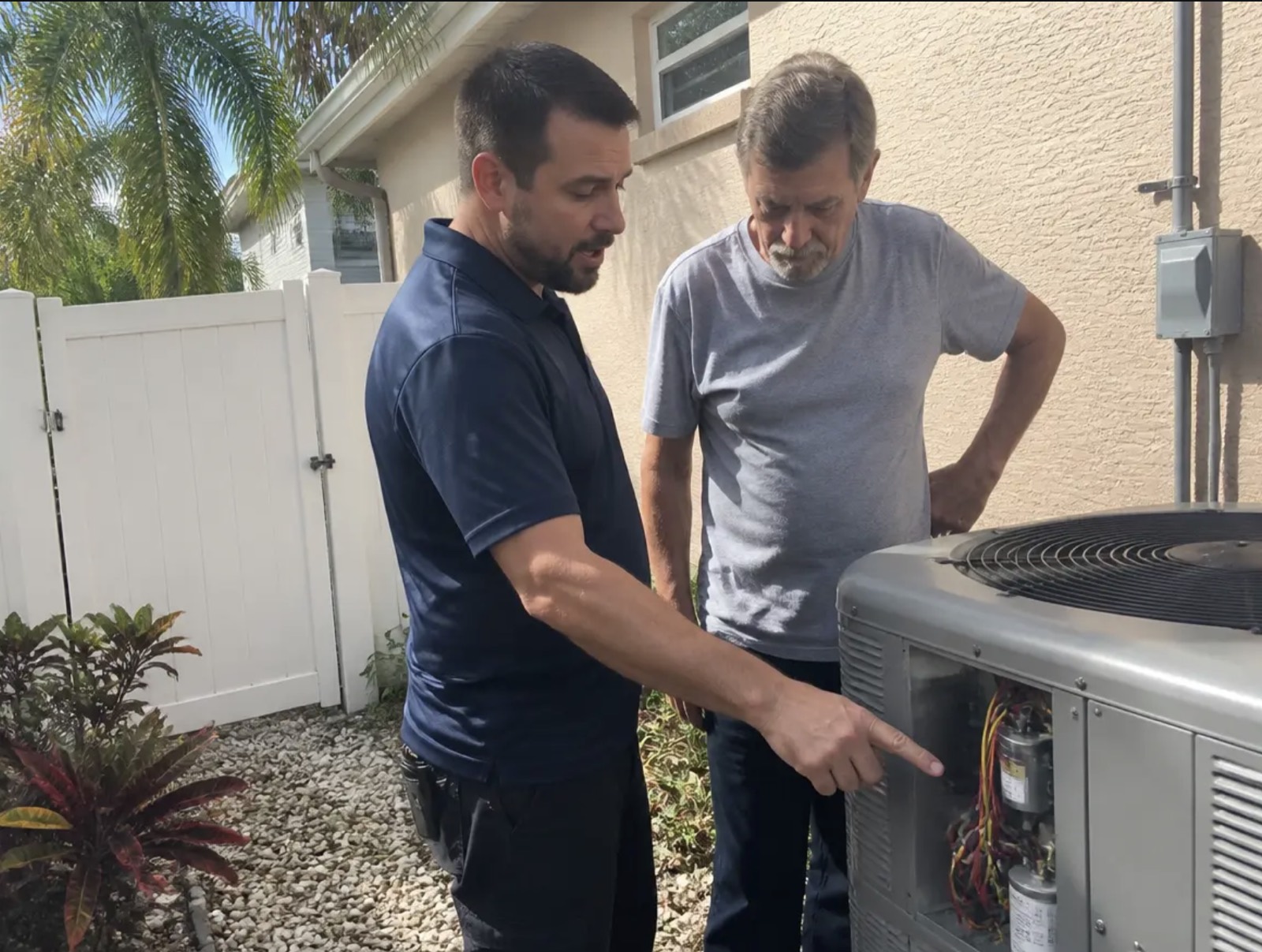
If someone is sneezing, congested, or wheezing more at home than away, the air they're breathing inside is often the cause. Dust, pollen, pet dander, and mold spores all ride through the system. Symptoms that follow you room to room point at the air itself. Asthma and allergy triggers are among the most common indoor air quality complaints we hear.
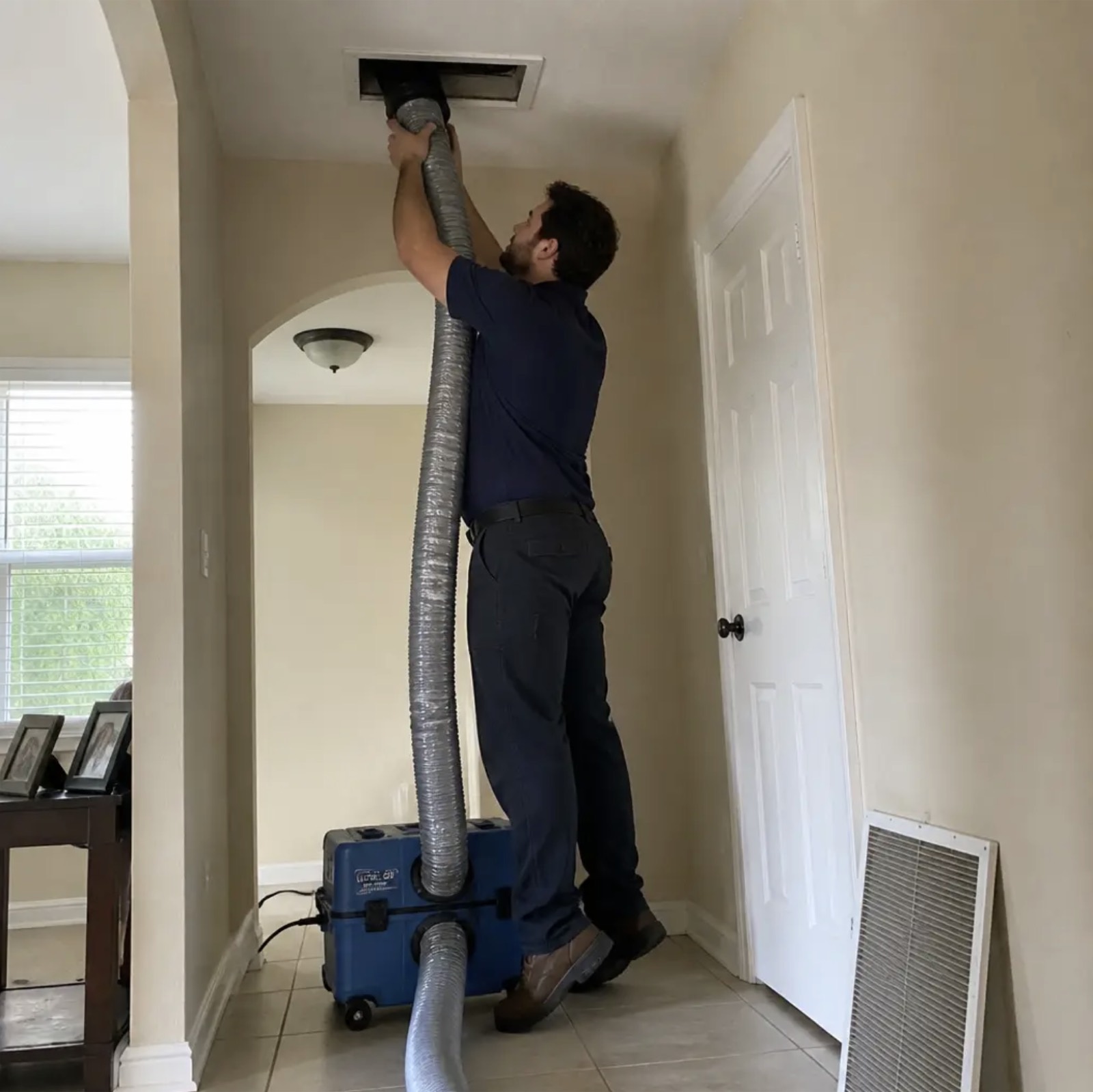
You dust and it's back in a day or two. Fine dust on furniture, screens, and vents means the air is full of particles the basic one-inch filter isn't catching. Fine particles are the part of indoor air quality people can actually see. Everything smaller stays suspended, which is where the health effects come from.
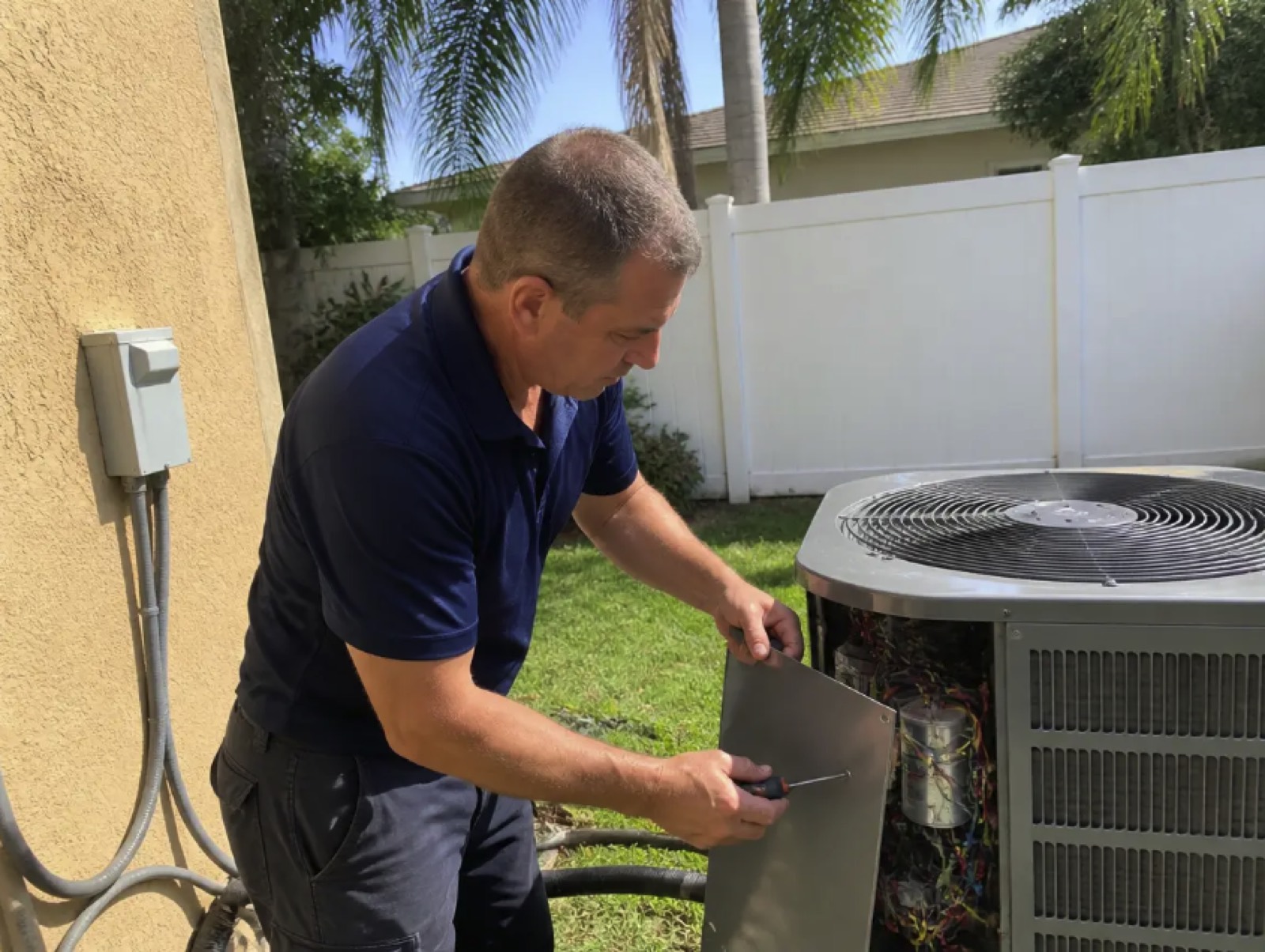
A musty smell when the AC kicks on, or mold showing up around vents, on walls, or at the coil, means moisture and spores are in the air. In Florida, humidity is what feeds it. Mold is the pollutant that gets noticed. Radon and lead dust are indoor air pollutants too, though neither is something an HVAC system addresses.
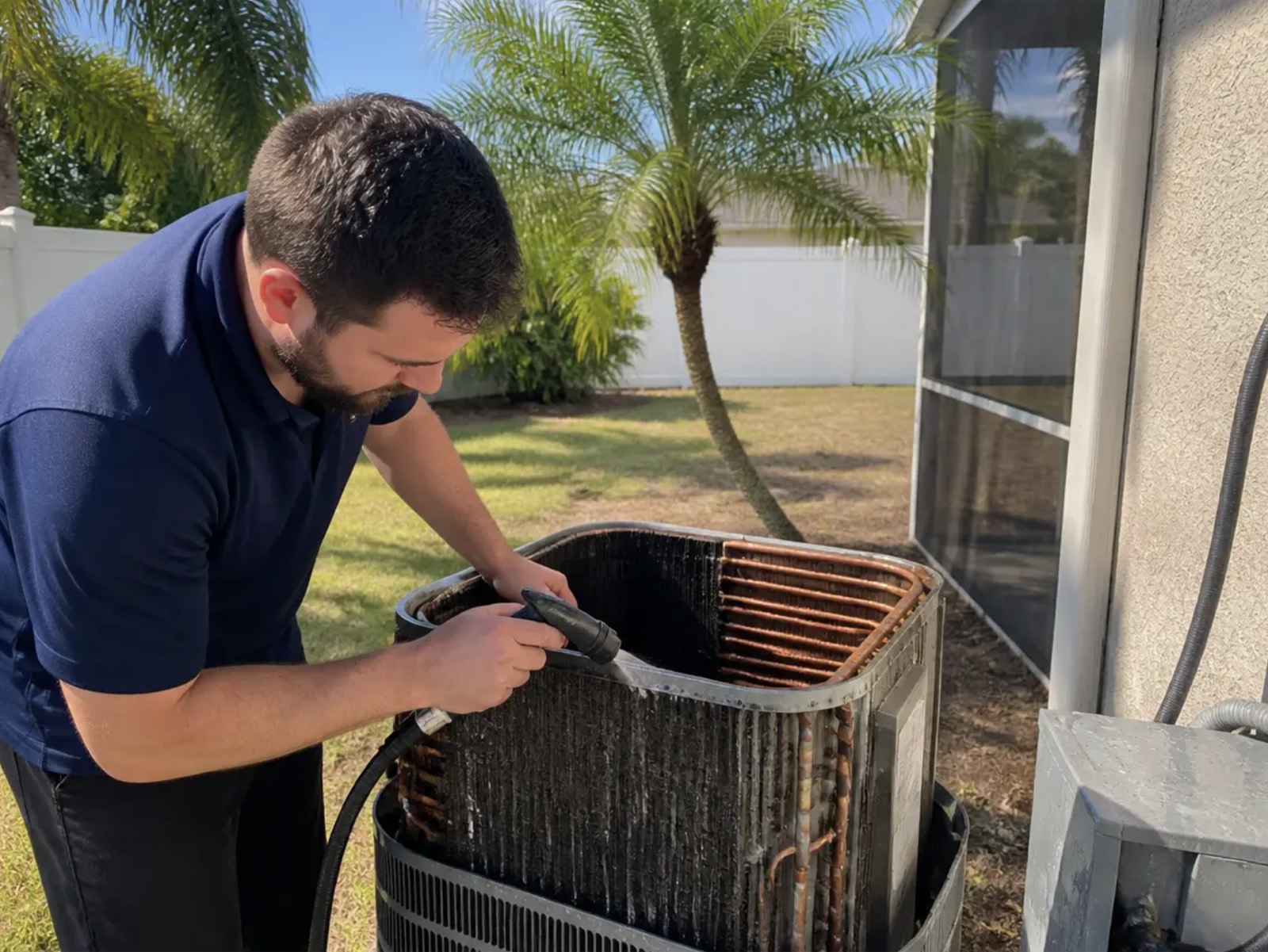
Pets, a new baby, someone with asthma, or a home that just won't drop below 60 percent humidity are all reasons to treat the air, not just cool it. Health is usually what prompts the call. Indoor air quality equipment is easier to justify when someone in the house has asthma than when it is only about comfort.
We don't just test your air and hand you a report. We install the equipment that fixes it, and in Florida that almost always starts with the humidity. Testing tells you the problem; equipment solves it. Our indoor air quality work is the second half, and we are clear about which half we do. The air quality outcome is what we stand behind.
In Florida, humidity is the root of most air problems. A whole-house dehumidifier pulls the moisture down into the 40 to 60 percent range where mold and dust mites can't thrive, takes the load off the AC, and stops that damp, sticky feeling. For most humid homes, this is where we start. Drying the air is the single biggest indoor air quality lever in this climate. Mold, dust mites, and the health complaints that follow all trace back to moisture.
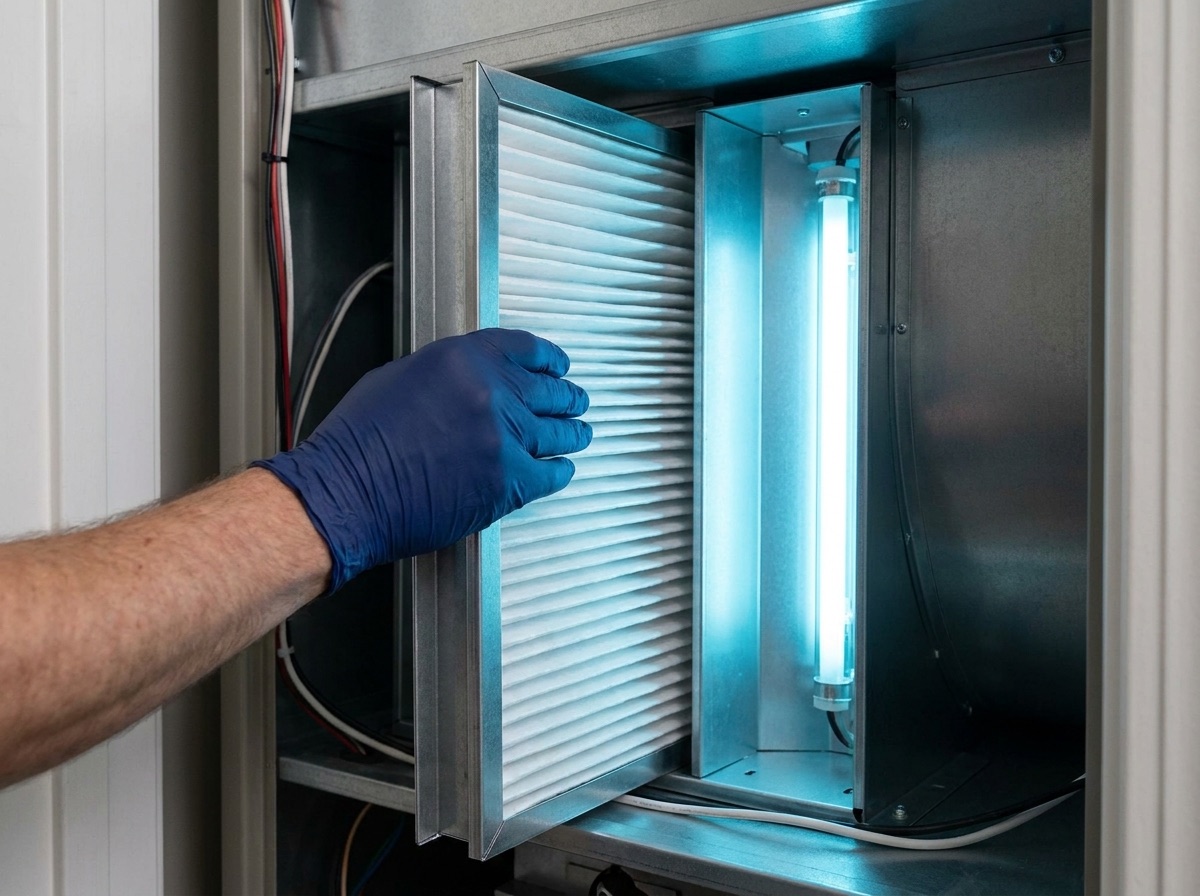
A UV-C light installed at the coil and in the ductwork kills mold, bacteria, and viruses as the air passes, and keeps the coil from growing mold in the first place. The CDC, WHO, and ASHRAE all back UV for air disinfection, and in humid Florida it earns its keep. UV addresses biological pollutants rather than particles. It is one part of an indoor air quality plan, not the whole of it.
The basic one-inch filter barely catches the big stuff. We install a deeper media filter rated MERV 13 or higher, which traps the fine dust, pollen, and dander a standard filter lets right through, without choking off airflow. Filtration is where particle pollution gets handled. A deeper filter changes the indoor air quality more than any gadget bolted on afterwards.
For homes that need more than filtration, a whole-house air purifier or air scrubber treats the air across the entire system, pulling out fine particles and allergens before they recirculate. Pairing it with a clean duct system from air duct cleaning gives the purifier a clean start. A purifier suits a home that is already dry enough. Adding one before the moisture is handled rarely improves indoor air quality much.
Newer, tightly sealed homes trap stale air, and the moisture and odors with it. A controlled fresh-air intake brings in measured outside air and pushes the stale air out, following the ventilation standard, so the home breathes without letting humidity run wild. Fresh air is the part most people forget. Ventilation dilutes indoor pollutants that filtration cannot capture, which is why the health guidance covers both. It also dilutes the pollutants that build up overnight.
Our Process
Call or message Frostline to set up a visit. We'll ask what you're noticing, humidity, dust, allergies, smells, so we know where to focus. What you are noticing matters more than any number. Most indoor air quality problems announce themselves in plain terms. Air quality complaints are rarely subtle.
We check the home's humidity, the filtration, and the system, and figure out what's actually driving the air problem. You get a clear recommendation and a flat price. The assessment covers the whole home, not one room. Indoor air quality is a system property, so a single-room reading tells you little. The whole home shares one air path.
We install the equipment that fits the home, a dehumidifier, UV lights, better filtration, or a purifier, and tie it into the existing system cleanly. Equipment gets sized to the house and the problem. Oversized kit does not improve indoor air quality, it only costs more to run. Right-sizing is an air quality decision as much as a cost one.
We confirm the humidity and airflow are where they should be, walk you through the new equipment, and leave you with cleaner, drier air. No upsells. We confirm the numbers before leaving. Indoor air quality work is easy to sell and hard to verify, so we show you the readings.
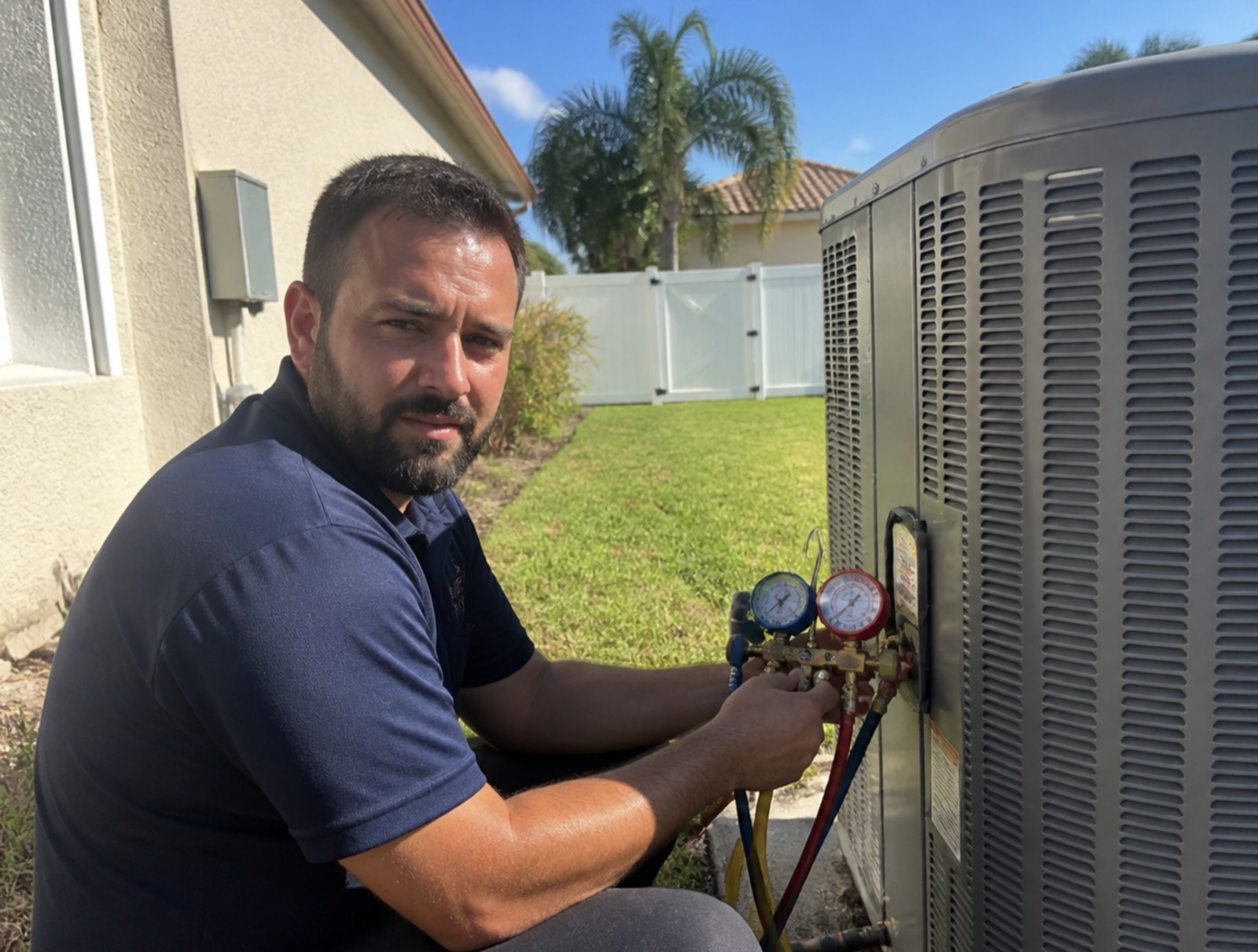
Indoor air quality is part of what Frostline does as an AC specialist. The technicians work on residential AC and HVAC systems every day, so the air-quality equipment ties into a system they already know. We install the fix and size it to the home, instead of just handing you a test result. The equipment ties into a system the technicians already service. That is the difference between indoor air quality work and a bolt-on product sale. The air quality result gets checked at the end.
In a humid climate, the air is only as good as the system moving it. Frostline improves indoor air across Delray Beach and coastal Palm Beach County, and air-quality work pairs naturally with regular AC maintenance so the whole system stays clean. Technicians are licensed, insured, and bonded. Air quality and comfort are the same conversation in this climate. A home that holds moisture well has fewer pollutants circulating through it.
Get My Free Quote
We check the home and recommend before we quote. The indoor air quality assessment costs nothing, and the air quality findings are yours either way.
Dehumidifiers, UV, and filtration, not just a test. Equipment, not a report on your air quality.
Equipment matched to your home's humidity. Sized to the home and to its air quality problem.
Licensed, insured, and bonded.
Answers to the questions homeowners ask most before improving their home's air. These come up on most indoor air quality calls.
Sticky or humid air the AC can't dry out, dust that settles right back after you clean, a musty smell when the system runs, and allergies or congestion that ease up when you leave the house. In Florida, humidity is usually behind most of it. Any two together usually mean the indoor air needs work rather than the thermostat. Health symptoms are the ones worth acting on fastest. Health complaints outrank comfort complaints every time.
Most Florida homes benefit from one. The air runs humid year round, and if the house sits above about 60 percent humidity you get mold, dust mites, and that damp feeling no matter how cold the AC runs. A whole-house dehumidifier holds it in the 40 to 60 percent range, and it eases the load on the AC too. Moisture control is the foundation of indoor air quality here. Everything else works better once that part is right.
They solve different problems. A dehumidifier removes moisture, which is what stops mold and dust mites. A purifier or filter removes particles like dust, pollen, and dander. In Florida most homes need both, and we usually handle the humidity first since it's the bigger driver here. Particles and moisture are different pollutants and need different equipment. Most air quality plans in this climate include both. Pollution drawn in from outside adds to what is already there.
A UV-C light installed at the coil and in the ductwork kills mold, bacteria, and viruses as the air passes by, and it keeps the coil from growing mold in the first place. The CDC, WHO, and ASHRAE all recommend UV for air disinfection, and it's a strong fit for humid Florida systems. UV handles what filters cannot catch. Neither replaces the other in an indoor air quality plan.
If anyone in the house has allergies or asthma, or the home stays humid and dusty, yes. Cleaner, drier air means fewer triggers, less dust on everything, and a system that doesn't work as hard to keep up. It's comfort and health, not just a gadget. Health is the honest reason most people do this. Asthma triggers drop when the indoor air quality improves, and the rest is comfort. Health is the measurable part of it.
Whole-house dehumidifiers, UV germicidal lights, deeper MERV media filtration, whole-house air purifiers and air scrubbers, and fresh-air ventilation. We assess the home first and recommend the mix that actually fits the problem, not a one-size package. We recommend from the assessment, not from a package. Indoor air quality equipment only earns its cost when it matches the pollutants actually present. Air quality equipment is never generic.
We assess the home, your humidity, your filtration, and what you're noticing, and recommend the equipment to fix it. We don't do formal lab air testing or mold remediation. If a problem needs that, or it turns out to be a leak driving mold in the system, that's an AC repair or a testing specialist, and we'll point you the right way. Being clear about that boundary matters. We improve indoor air quality with equipment; formal pollutant testing is a different trade and we will say so. That honesty is part of the health conversation.